Skip to content
Thryve

Nextcloud vs Syncthing vs Immich

Self-controlled storage and sync trade-offs across team collaboration, peer-to-peer folders, and photo libraries.

Privacy dimensions side by side

Every cell is taken from the same structured product profile used on software pages. Unknown values remain visible as Not confirmed.

Privacy comparison of Nextcloud, Syncthing, Immich
DimensionNextcloudSyncthingImmich
ArchitectureSelf-hostableLocal-firstSelf-hostable
ProcessingSelf-hostedLocal-firstSelf-hosted
StorageSelf-hostedLocal deviceSelf-hosted
Account requirementsOrganization-managedNo accountOrganization-managed
TrackingNot confirmedOptional telemetryOptional telemetry
Source availabilityOpen sourceOpen sourceOpen source
Offline supportPartialPartialPartial
EncryptionE2EE: Partial; at rest: PartialE2EE: Yes; at rest: NoE2EE: No; at rest: Not confirmed
Self-hostingYesYesYes
AI usageSelf-hosted AINo AISelf-hosted AI
PricingOpen core — Community software is self-hostable; enterprise subscriptions, support, and managed providers are available separately.Donation — The software is free and open source; donations support the project.Donation — The self-hosted software is free and open source; optional lifetime supporter product keys are sold separately and do not unlock features or remove limits.
PlatformsWeb, Desktop, Mobile, Self-hostedDesktop, Self-hosted, CLIWeb, Mobile, Self-hosted
Review statusListed · Last reviewed Not yet reviewedListed · Last reviewed Not yet reviewedListed · Last reviewed Not yet reviewed

Contextual trade-offs

These notes describe when one option may fit a situation better. They are not overall rankings and do not replace reading full privacy profiles.

  • Better for self-hosted team collaboration

    Nextcloud

    Nextcloud covers files, sharing, and related apps for small teams that want one self-hosted suite rather than single-purpose sync only.

    View privacy profile
  • Better for peer-to-peer folder sync without a central server

    Syncthing

    Syncthing is designed to sync folders between devices you control without requiring a vendor-operated cloud store for the file payload.

    View privacy profile
  • Better for self-hosted photo and video libraries

    Immich

    Immich targets private photo backups and browsing on infrastructure you run, which is a narrower job than full office collaboration.

    View privacy profile
  • Better when avoiding accounts is required for core use

    Syncthing

    Syncthing’s core sync model does not depend on a vendor account, which suits people who want device-to-device transfer without registration.

    View privacy profile

How to read this comparison

Keeping files on infrastructure you control can mean very different products. Nextcloud is a broad self-hosted collaboration suite, Syncthing specializes in peer-to-peer folder sync without a central vendor cloud, and Immich focuses on self-hosted photo and video libraries.

No universal winner

Self-hosting shifts operational risk to you: updates, backups, access control, and exposure of ports or reverse proxies. Partial network use for discovery or updates may still exist—read each profile carefully.

Products in this comparison

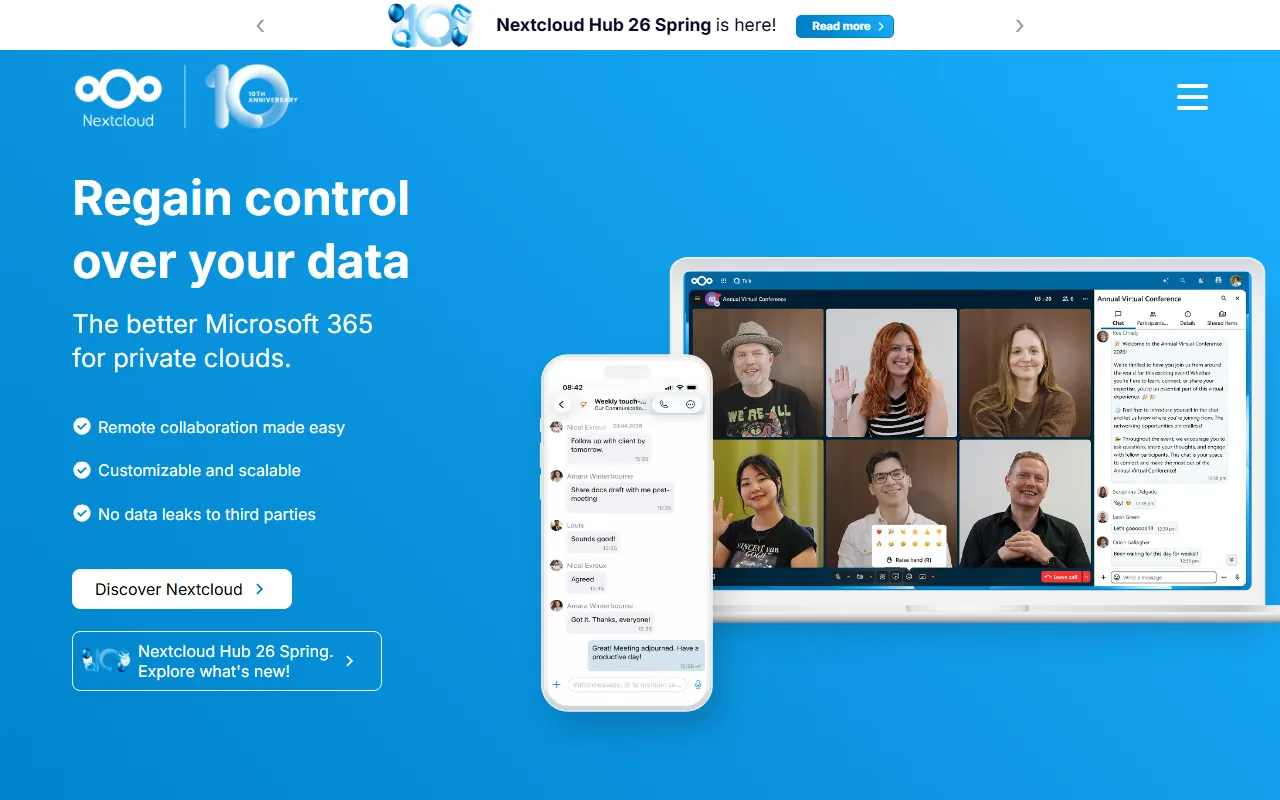
  • Nextcloud homepage showing self-hosted collaboration suite
    Nextcloud logo

    Nextcloud

    An open-source self-hosted collaboration platform for files, communication, groupware, and extensible applications.

    • Self-hostable
    • Open source
    • Partial offline
    • Self-hosted AI
    • Web · Desktop · Mobile
    Open core
    View privacy profile
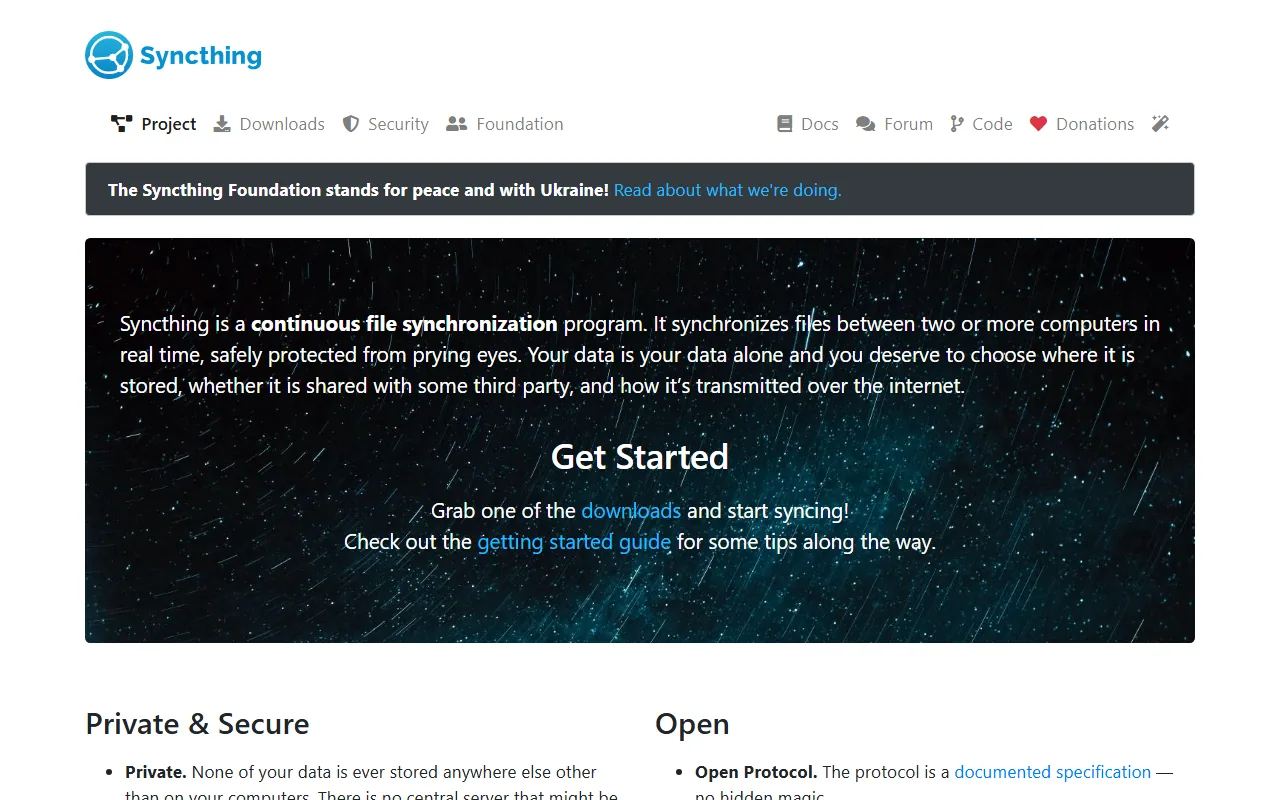
  • Syncthing homepage showing peer-to-peer file sync
    Syncthing logo

    Syncthing

    An open-source peer-to-peer file synchronization program that exchanges files directly between authorized devices.

    • Local-first
    • Open source
    • Self-hostable
    • No account
    • Partial offline
    • End-to-end encryption
    Donation
    View privacy profile
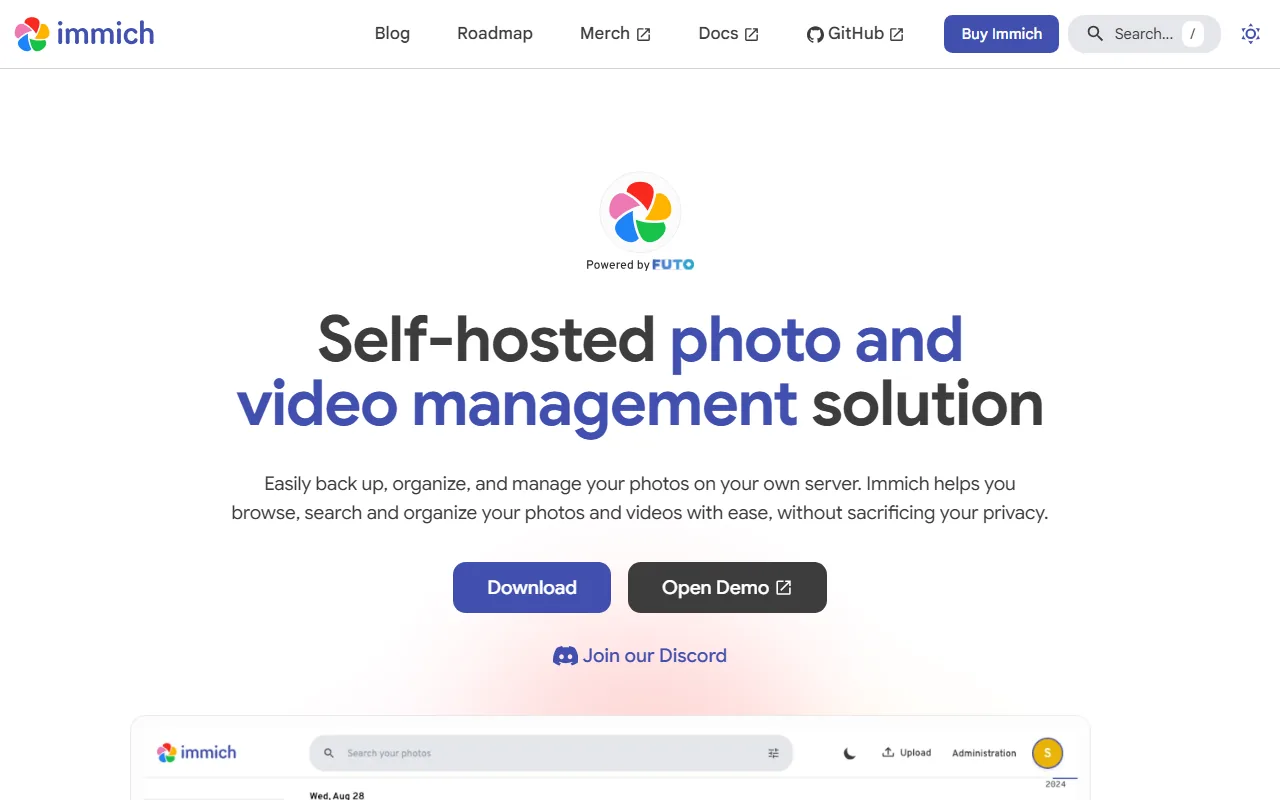
  • Immich homepage showing self-hosted photo management
    Immich logo

    Immich

    A high-performance open-source server for self-hosted photo and video backup, organization, search, and sharing.

    • Self-hostable
    • Open source
    • Partial offline
    • Self-hosted AI
    • Web · Mobile · Self-hosted
    Donation
    View privacy profile